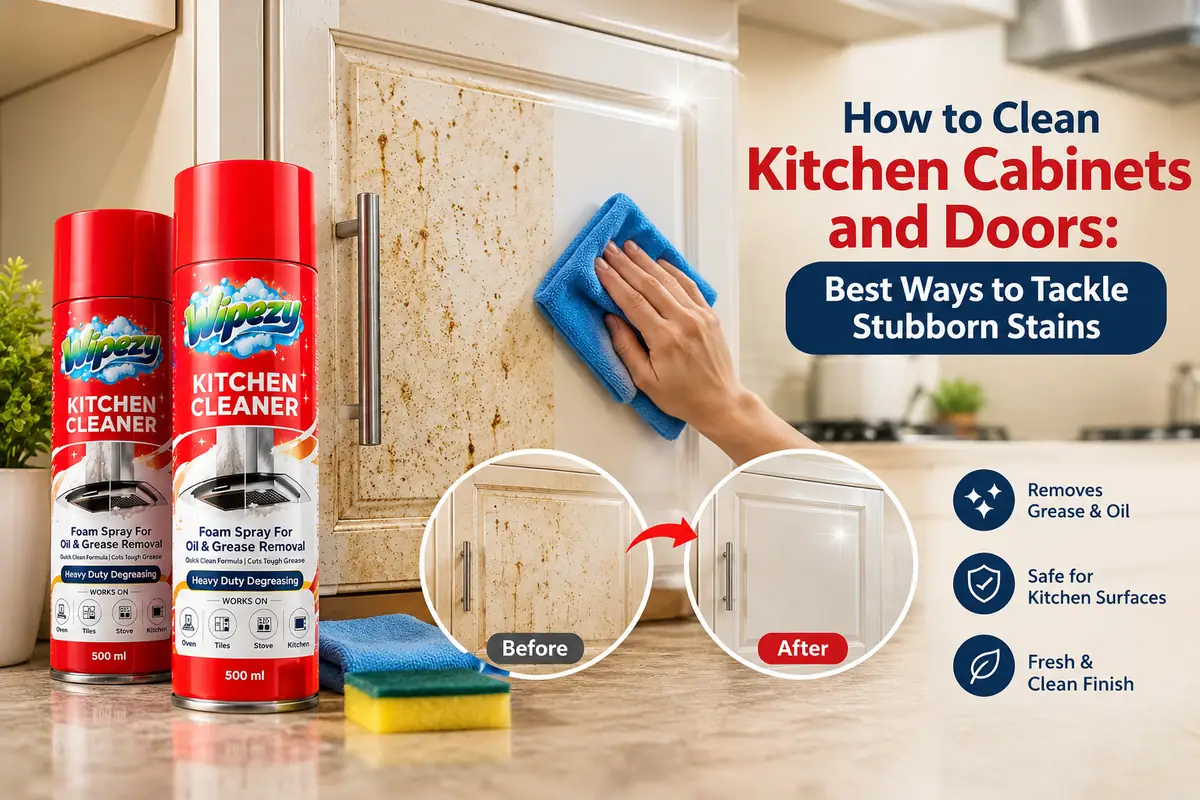
How to Clean Kitchen Cabinets and Doors: Best Ways to Tackle Stubborn Stains
By Wipezy Author8 min read
Table of contents
For everyday dirt, kitchen cabinets need nothing more than warm water, a few drops of dish soap and a soft microfibre cloth. The sticky bit near the stove is different. That wants a degreasing foam spray, or a thin baking soda paste left on for ten minutes. Wipe everything dry after, and go easy on acrylic and PU, they scratch.
Want to know which cabinets in your kitchen need the most help? Touch the ones beside the gas stove. Chances are they feel a little tacky, even if they look okay from across the room. That's tadka smoke and pressure cooker steam, months of it, sitting there as a thin film. And dust loves sticking to it.
A quick wipe doesn't touch that layer, so most people assume the shutters have simply aged. They usually haven't. They just need the right cleaner for whatever finish you've got, and a bit of patience on the bad patches. For the weekly wipe-down, a kitchen cabinet cleaner spray that foams up and stays put does most of the work for you. Below we've covered how to clean kitchen cabinets of every finish you'll find in an Indian modular kitchen, and then the doors around the house, which pick up the same fingerprints and muck.
First Figure Out What Your Shutters Are Made Of
Modular kitchens fitted in the last ten years or so mostly use one of five or six finishes. They don't all react the same way. Something that's perfectly fine on laminate can leave a glossy acrylic shutter dull, and there's no fixing that later.
|
Finish |
How you can tell |
Fine to use |
Keep away |
|
Laminate |
Matte or slightly textured, thin edge band |
Soapy water, degreaser, baking soda paste |
Steel wool, acetone |
|
Acrylic / high gloss |
Shiny like a mirror, every fingerprint shows |
Mild soap, microfibre only |
Magic erasers, scrub pads, scouring powder |
|
PU / lacquer |
Smooth painted look, gloss or matte |
Mild soap, foam cleaner |
Strong solvents, hard scrubbing |
|
Membrane / PVC wrap |
No visible joints, rounded edges, often grooved |
Damp cloth, quick wipes |
Water sitting on edges, heat |
|
Wood or veneer |
You can see the grain |
Barely damp cloth, wood cleaner |
Soaking, vinegar left on |
Glass shutters with aluminium frames? Easiest of the lot. Vinegar-water spray or any glass cleaner, then a dry microfibre so you don't get streaks. A lot of kitchens also have those long aluminium profile handles along the top edge of the shutters. Grease and dust settle right inside the groove, so run a damp cloth through it.
Can't tell which finish you have? Dig out the invoice from your carpenter or the modular kitchen company, it's usually written there. Otherwise, try any new cleaner on the inside of a door first, near the hinge. If it goes wrong, nobody sees it.
How to Clean Kitchen Cabinets, Start to Finish
Give yourself about half an hour for the whole kitchen. If nobody's touched the cabinets in a year, more.
-
Clear the counter below first, and keep a dry towel close by.
-
Start at the very top, on the roof of the upper cabinets. The worst grease is up there.
-
One litre of warm water, roughly a teaspoon of dish soap. Stir.
-
Microfibre cloth, wrung out till it's barely damp. Top to bottom on each shutter.
-
Sticky patch? Spray degreaser or foam on it, give it a minute or two, wipe again.
-
Handles get their own turn, with an old toothbrush around the screws.
-
Last, a second cloth to dry every shutter.
About step 2. The top of the upper cabinets is the one place nobody checks, so it never gets cleaned. Grease floats up, sits there, collects dust, and slowly turns into a brown crust you can nearly peel off in strips. Once it's clean, put some old newspaper or wax paper up there. Next time you just change the paper.
And don't skip the drying. It sounds like a small thing, but water left on laminate edges or in the joints of membrane shutters seeps in bit by bit. A monsoon or two later, the edges start to lift or swell.
Stains That Won't Come Off With a Wipe
The worst one is usually the old grease next to the stove. When it has gone brown, soap just slides over it. Mix baking soda with a few drops of water and a little dish soap until it’s like a paste. Put a thin coat on the patch and leave it for about ten minutes, then rub it off in small circles with a damp cloth. Acrylic or high-gloss shutter? Don’t use the paste there. Use foam cleaner instead, two or three rounds.
Haldi marks are the next headache. On light laminate, turmeric leaves a yellow patch that soap hardly moves. Baking soda paste works on it, and daylight helps too. The yellow colour in haldi comes from curcumin, which fades in light. So on a shutter near a window, whatever yellow is left after cleaning usually goes lighter in a few days.
Open the cabinet where you keep the oil bottles and look at the shelf. You’ll most likely find sticky rings. Clean them with warm soapy water, dry the shelf, and put a washable liner or a small tray under the bottles after that. Sticker glue and child-lock tape marks take less work. A few drops of cooking oil rubbed in, one minute, then a soapy cloth to take the oil off.
How to Clean Doors Around the House
Doors in the rest of the house mostly get dirty in the same three places. Around the handle, from hands. Down at foot level, from people kicking them shut. And along the top edge, where dust just sits. So if you're wondering how to clean doors without giving up your whole Sunday, start with those spots rather than scrubbing the entire door.
Bedroom doors in most Indian flats are laminated flush doors, and they clean exactly like laminate cabinets. Soapy water, wrung-out cloth, dry it off. A polished wooden main door is fussier: a barely damp cloth, and some wood polish every few months, because water slowly dulls the shine. PVC bathroom doors don't mind water, and a soft brush helps on the textured parts. Leave handles, locks and the latch for last. Most of the hand grease ends up there.
One more door worth a proper look is the cabinet under the sink. It gets splashed more than anything else in the kitchen, and its bottom edge is often the first thing to swell.
Keeping Cabinets Clean Between Deep Cleans
Two minutes now saves an hour later. Fried something? Wipe the two or three shutters nearest the stove while the kitchen is still warm, because fresh grease comes off with hardly any effort. Wipe all the handles once a week too, since hands carry oil from one shutter to the next. And keep the cooking oil bottles capped and wiped so drips don't land on the shelves.
Where an Active Foam Cleaner Saves Time
The problem with cabinet shutters is that they're vertical. Spray a runny cleaner and it's on the counter before it's done anything. An active foam cleaner stays where you put it, gets a minute to loosen the grease, and comes off with a damp cloth. It really helps on the high cabinets next to the chimney, where you're reaching up and the last thing you want is drips running down your arm.
One Shutter at a Time
So really, how to clean kitchen cabinets properly boils down to two things. Use the right cleaner for the finish, and don't let grease sit there for months. Start with the shutters next to the stove this week. Once those look good, the rest of the kitchen, and the doors around the house, won't take much at all.
Frequently Asked Questions
Q1. Can I use vinegar on kitchen cabinets?
A. On laminate and glass, a vinegar-water spray is fine. On natural wood and some painted finishes it can dull the surface if it sits there, so test it first or skip it.
Q2. Is a magic eraser safe for cabinets?
A. On matte laminate, used gently, mostly yes. On acrylic and high gloss, no. It's a very fine abrasive, and the dull patches it leaves don't polish out.
Q3. What's the easiest way to clean doors with lots of fingerprints?
A. Just do the area around the handle: warm soapy water, then dry it straight away. On doors that get touched all day, a weekly wipe of only that zone keeps them looking clean.
Q4. How often should I clean kitchen cabinets?
A. The shutters near the stove, every week. All the shutters, handles and cabinet tops, every two to three months. That's enough for most homes.
Q5. How do I get rid of the smell inside cabinets?
A. Empty it, wipe it with mild soapy water, let it dry with the door open, then leave a small bowl of baking soda inside. It soaks up the smell.