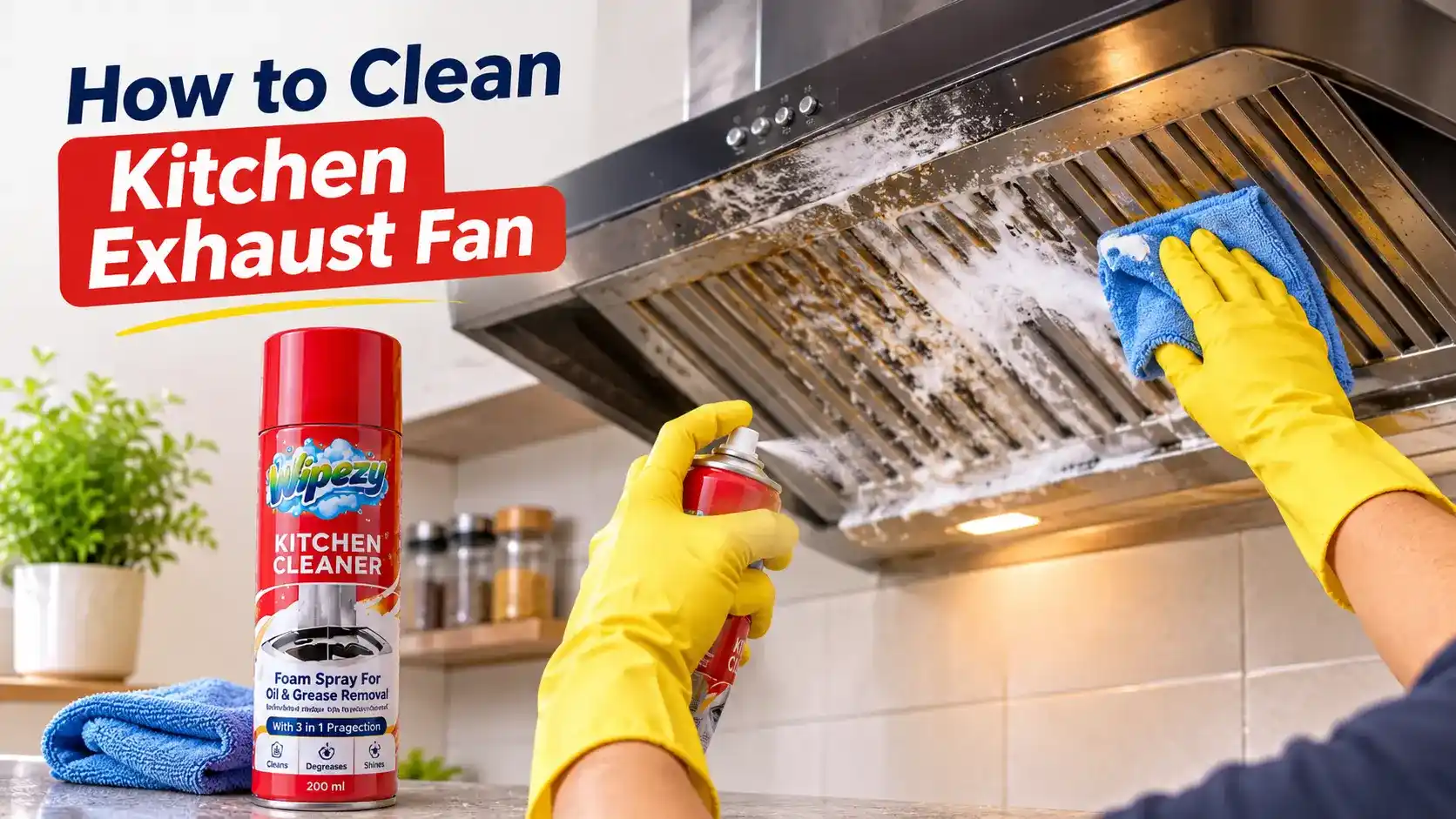
How to Clean Kitchen Exhaust Fan
By Wipezy Author8 min read
Table of contents
To clean a kitchen exhaust fan, switch off its power at the MCB first. Remove the front grill and, if possible, the blade. Wash these in warm water with dish soap, or use a degreasing foam on the sticky parts, then wipe and dry them fully. Clean around the motor with a dry or barely damp cloth only, and never let water reach it.
The exhaust fan in an Indian kitchen does a tough job. Every time you fry pakode or make a tadka, the oily air goes straight through it. Over a few months that oil settles on the blades, cools down and catches dust. Soon the fan looks brown, makes more noise and doesn't pull the smoke out the way it used to.
It looks like a messy job, but it's quite manageable once you know the right order. This guide covers how to clean exhaust fan parts safely, how to deal with grease that has gone sticky, and what not to do with the motor. If you've been putting it off because you weren't sure how to clean the exhaust fan in the kitchen without damaging it, start here.
First, Switch It Off at the MCB
Turning off the wall switch isn't enough for a fan that's wired into the wall. Havells, in the manual for its Ventil Air exhaust fan, says to always make sure the power supply is disconnected at the circuit breaker before cleaning or maintenance. So switch off the MCB for the kitchen, and only then touch the fan.
Wait until the blades have stopped completely. If the fan was running, give it a few minutes so the motor cools down too. And if you need a ladder or a stool to reach it, make sure it stands firmly on a dry floor.
What to Keep Ready
Most of this is already in your kitchen:
-
A screwdriver, if your grill or blade is fixed with screws
-
A bucket or tub of warm water with a spoon of dish soap
-
An old toothbrush and a soft sponge
-
Two dry cloths and a few sheets of old newspaper or a plastic sheet for the counter
-
Rubber gloves, because the grease can be very sticky
How to Clean Exhaust Fan Step by Step
-
Spread newspaper or a plastic sheet on the counter and stove below the fan.
-
Take a photo of the fan before you remove anything, so putting it back is easy.
-
Remove the front grill or mesh and put it in the warm soapy water.
-
If the blade comes off, mark which side faces the room with a marker, then remove it.
-
Let the grill and blade soak for 15 to 20 minutes.
-
Scrub them with the toothbrush and sponge, then rinse with clean water.
-
Wipe the fan body and the area around the motor with a dry or barely damp cloth.
-
Dry every part completely, fix them back, and only then switch the MCB on.
For the parts that stay on the wall, like the frame and the edges of the housing, our kitchen stain cleaner helps. Spray it on a cloth rather than straight onto the fan, wipe the greasy area, and go over it again with a clean damp cloth. This way, no liquid drips into the motor.
How to Clean Kitchen Exhaust Fan Grease That Has Gone Sticky
Fresh grease wipes off easily. Old grease is different. It turns thick and gluey, almost like a layer of brown paint. Soaking is the main trick here. Warm water and dish soap loosen it slowly, so give the blade and grill enough time in the tub before you start scrubbing. If it's still sticky after one round, soak and scrub again rather than scraping it with a knife.
Use warm water, not boiling water. Many home exhaust fans, like the common plastic ventilation fans, have plastic blades and bodies, and very hot water can warp thin plastic. A degreasing foam is useful for the stubborn spots, because it stays on the surface and gets time to work.
Skip kerosene, petrol and thinner, even though some people still use them for this. The Havells manual clearly says not to use abrasive cleaners or solvents. In a kitchen next to a gas stove, a flammable liquid is also a real fire risk. Knowing how to clean kitchen exhaust fan grease properly mostly means being patient with soap and warm water.
Handle the Blade Gently
The blade looks strong, but it's balanced carefully. If you bend a blade while scrubbing or pulling it off, the fan can start to wobble and make a humming or rattling sound when it runs. Hold it by the centre, not by the tips, and scrub each wing with light pressure.
When you put it back, check your marker so the blade faces the right way. Then turn it slowly by hand before switching on. It should spin freely without touching the grill or the frame.
Keep the Motor Dry
The motor is the one part that must never get wet. Crompton, in its guide on cleaning kitchen exhaust fans, warns that excess moisture can damage the electrical parts of the fan. So no spraying, no pouring water and no dripping cloths near it.
Wipe the motor cover gently with a dry cloth, or one that is only slightly damp. The Havells manual also says the motor is designed to be maintenance-free, so you don't need to oil it or open it up. If the motor itself sounds wrong or gets very hot, call an electrician instead of trying to fix it.
Don't Forget the Outside Grill and Shutter
Many people clean only the side they can see. But the side facing outside also gets dirty. Dust, dry leaves and pigeon feathers collect on the outer grill, and sometimes birds even try to build a nest there. All of this blocks the airflow.
Some exhaust fans also have small flaps at the back that open when the fan runs and close when it stops. Grease can make these flaps stick. If yours has them, wipe them with a soapy cloth and check that they move freely. If you can't reach the outside safely, don't lean out of the window. Ask someone with the right ladder to do it.
Cleaning It Without Taking It Apart
If the fan is only a little dusty, you don't need to remove anything. With the power off at the MCB, wipe the grill and the blades you can reach with a damp cloth. For light grease, spray a little foam cleaner on the cloth, wipe the blades and grill, and finish with a clean damp cloth. This quick clean every few weeks means the deep clean takes much less time.
How Often Should You Clean It?
When you plan how to clean the exhaust fan in the kitchen on a regular schedule, the brands give a rough guide. Crompton suggests cleaning an exhaust fan at least twice a year, and any time it stops working well. Atomberg's guide says kitchen fans collect grease faster and suggests cleaning about every three months if you cook a lot.
A good sign that it's time is when the fan gets louder, pulls less smoke, or you see grease drips on the wall below it. If you do a lot of frying, the three-month routine is safer.
Final Word
Once you know how to clean exhaust fan parts in the right order, it stops being a dreaded job. Switch off at the MCB, soak the grill and blade in warm soapy water, keep the motor dry, and check the outside grill too. Do a quick wipe every few weeks, and your kitchen will stay less smoky and less greasy.
Frequently Asked Questions
Q1. Can I wash the whole exhaust fan in water?
A. No. Only the removable parts like the grill and blade should go in water. The motor and wiring must stay dry.
Q2. Can I use kerosene to remove the grease?
A. It's better not to. Manufacturers like Havells say not to use solvents, and kerosene is flammable, which is dangerous near a gas stove.
Q3. Why is my exhaust fan making noise after cleaning?
A. The blade may be bent, fixed the wrong way round, or touching the grill. Switch it off at the MCB and check the fitting.
Q4. How to clean exhaust fan blades that don't come off?
A. Wipe them in place with a cloth sprayed with cleaner, one blade at a time, and dry them before switching the power back on.