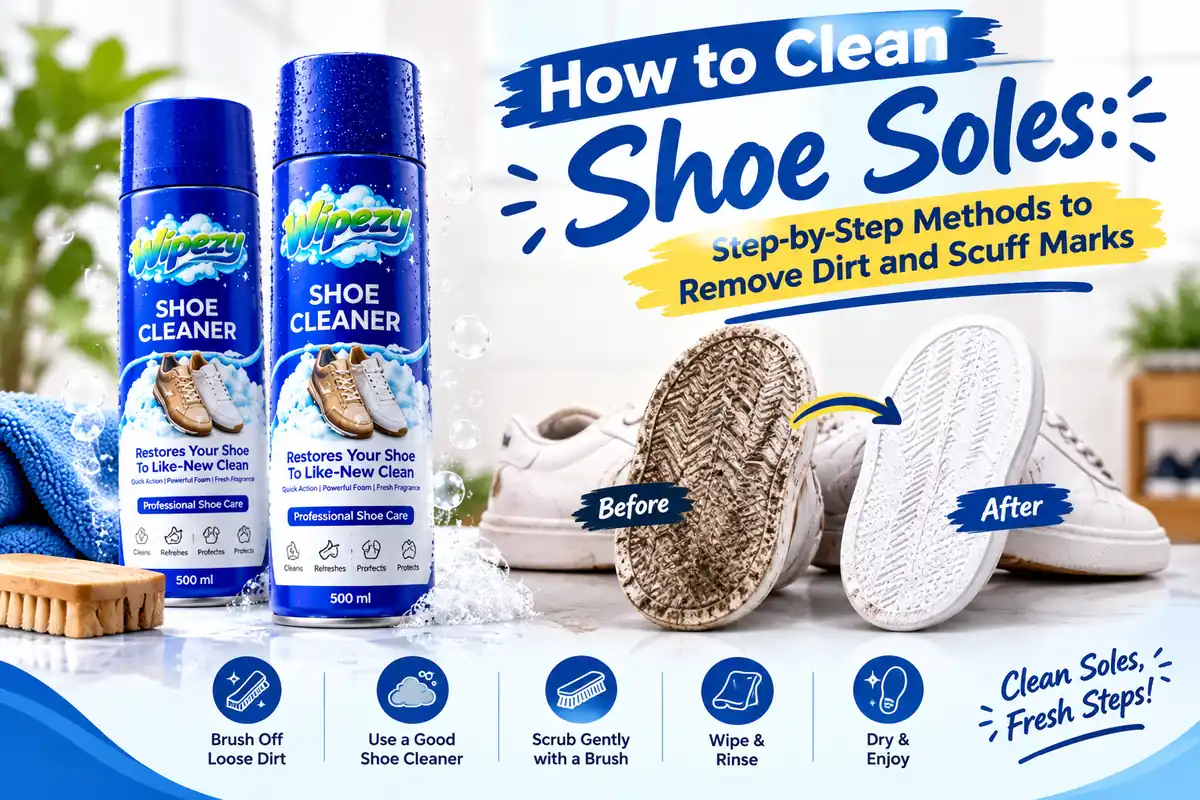
How to Clean Shoe Soles: Step-by-Step Methods to Remove Dirt and Scuff Marks
By Wipezy Author8 min read
Table of contents
Honestly, don't start with water. Bang the shoes together outside first and let the dried mud fall off on its own, because wet mud just smears. Then it's an old toothbrush, warm water and a few drops of dish soap on the tread. White sides scuffed? A little foam cleaner sorts most of it (plain toothpaste works in a pinch). Wipe down with a damp cloth, skip the bucket, and let them dry in the shade.
White sneakers stay white for about a week. Maybe two, if you're careful. Then it's a metro platform, a puddle you didn't see coming in July, somebody's foot landing on yours at a wedding, and suddenly the sides look grey and the bottom is... well, you don't really want to know.
Actually, someone did want to know. Back in 2008, Dr. Charles Gerba, a microbiologist at the University of Arizona, tested shoes along with The Rockport Company and found an average of 421,000 units of bacteria on the outside. The slightly reassuring part? Washing them with plain detergent knocked that down by 90% or more. So figuring out how to clean shoe soles isn't only about looks. It's also about what you're carrying across the living room floor.
Every Sole Is Really Two Cleaning Jobs
Flip a sneaker on its side and you'll see it. There's the bottom, the tread, all grooves and ridges, built to grip the road and (unfortunately) everything lying on it. Then there's the sidewall, the band of rubber or foam running around the shoe. That's the bit people actually notice.
These two don't want the same treatment. Go hard on the tread with a stiff brush and it'll be fine. Do that to the sidewall and you'll leave fine scratches, especially on matte finishes, and scratched rubber picks up dirt faster than before. It's a really common mistake. One brush, one pressure, whole sole, and you end up with soles that are cleaner but somehow duller.
Check What Your Sole Is Made Of
Before any scrubbing, figure out the material, because it changes how to clean shoe soles without damage. Most sneakers and school shoes run on rubber. Running shoes and sliders tend to use EVA foam. Formal shoes? Often leather underneath.
|
Sole |
Feels like |
Fine to use |
Don't use |
|
Rubber |
Firm, a bit heavy, textured |
Soapy water, foam cleaner, melamine sponge |
Chlorine bleach |
|
EVA foam |
Light, squishy |
Foam cleaner, soft cloth |
Hard scrubbing, hot water, solvents |
|
Gum or crepe |
Honey-coloured, a bit sticky |
Crepe brush, hardly any water |
Soaking, oily cleaners |
|
Leather |
Smooth, hard, on formal shoes |
Barely damp cloth, leather cleaner |
Soaking, soapy scrubs |
Can't tell? Check the tag under the tongue, or look the model up online. And test whatever you're using on a little spot near the heel first. Takes ten seconds, saves a pair.
How to Clean Shoe Soles in Seven Steps
This works for pretty much any rubber or foam sole. Sneakers, school shoes, the slip-ons you wear to the market.
-
Laces out first, otherwise they drink up the dirty water.
-
Got mud? Let it dry fully, then knock the shoes together outside and brush off whatever falls.
-
Warm water (not hot) in a small bowl, plus a few drops of dish soap.
-
Old toothbrush on the tread. Follow the grooves instead of going across them.
-
Spray a shoe cleaning foam spray on the sidewalls, give it half a minute, then work it in with a soft brush.
-
Damp microfibre cloth over everything.
-
Scrunch some newspaper inside and leave them somewhere shady.
Step 2 is the one that changes everything, and almost nobody bothers. Wet mud gets pushed deeper into the grooves the second you scrub it. Leave it overnight on the balcony, though, and it cracks and drops out in lumps. Small stones stuck deep in the tread? A toothpick, or the tip of a key, does better than any brush.
Also, notice what's missing: a bucket. Dunking the whole shoe soaks the insole, takes forever to dry, and over time it can weaken the glue holding the sole on. A damp cloth and a bit of foam is all the water a sole really needs.
Getting Scuff Marks Off the Sidewall
Something most people don't realise: a scuff usually isn't dirt in the sole at all. It's a bit of someone else's rubber, paint or floor that got rubbed onto yours. Good news, really, because if it's sitting on top, it can come off. Go gentle first. Foam and a soft brush clear most fresh marks in a minute or so. For the stubborn black streaks, try a melamine sponge (So you will see it sold as a "magic eraser"). Wet it, squeeze it, rub lightly.
It's basically super-fine sandpaper, so press hard and you'll take the shine off a glossy sole. No melamine sponge lying around? A pea-sized bit of plain white toothpaste, not the gel kind, on an old toothbrush. Just wipe every bit of it off after, or it dries into a chalky film that looks worse than the scuff did. And please don't reach for nail polish remover. Acetone can soften or cloud some synthetic soles, and no amount of wiping fixes that.
Gum, Tar and Other Stuck-On Stuff
Chewing gum is the worst. Your instinct is to pull it off. Don't, it'll just stretch and smear. Hold an ice cube on it for a few minutes instead, or put the shoe in a plastic bag in the freezer for half an hour. Once it's rock hard, flick it off with a butter knife or an old card.
Tar is the opposite problem. It needs softening, not freezing. A little coconut oil or regular cooking oil, rubbed in and left for five minutes, loosens it enough to wipe away. Then wash the oily patch with soapy water. Skip that last bit and you'll be sliding across the bathroom floor.
Why White Soles Turn Yellow (and Why Scrubbing Won't Fix It)
This is the part that most guides get wrong, or at least oversell. Dirt sits on the sole. Yellowing doesn't. It happens inside the rubber or foam itself, when oxygen, UV light and heat slowly change the material. That's why an old pair can be spotless and still look more cream than white.
So yes, cleaning helps a little, since you're removing the grime on top. It just won't undo that change. Hydrogen peroxide-based sole products, left out in the sun, can lighten it, though results are hit and miss and overdoing it can hurt the glue or foam. Chlorine bleach? Skip it. It might look whiter for a bit while quietly damaging the rubber. The best fix, honestly, is not letting it happen: keep shoes away from sunny windows and heaters, and don't dry them in the afternoon sun.
Drying Without Damage
Shade, always. Strong sun speeds up yellowing, and heaters or a hair dryer can warp foam and loosen glue. Stuff the shoes with newspaper or an old cotton cloth, swap it after a few hours once it's damp, and give them a full day. In a rush? Put a fan on them. Moving air does more good than heat, and it doesn't wreck anything.
How Often Should Your Soles Get Cleaned?
For a pair you wear every day, a quick brush and wipe once a week is plenty. After mud, puddles or anything you'd rather not bring indoors, do it the same day. A proper scrub every few weeks keeps that grey film from settling in. White sneakers need more attention than black ones, obviously. Everything shows.
Where an Active Foam Cleaner Earns Its Place
For the tread, soap and water are honestly fine. The sidewall's the tricky bit. Water runs straight off curved rubber before it does anything, and more water is the last thing the shoe needs. An active foam cleaner just sits there, loosens the dirt in under a minute, and wipes off with a damp cloth. No bucket, no soaking. It's quick enough that you'll actually use it after a muddy walk, instead of promising yourself you'll deal with it on Sunday.
Before Your Next Walk
So that's how to clean shoe soles, really. Let the mud dry, brush the tread, be gentle with the sides, skip the bucket, and keep them out of direct sunlight. With Wipezy, keeping your sneakers clean and fresh becomes easier. Just ten minutes a week, give or take, can help your shoes stay closer to how they looked the day you brought them home.
Frequently Asked Questions
Q1. Can I just throw my shoes in the washing machine?
A. Some canvas sneakers survive a gentle cold cycle. It doesn't do much for soles, though, and it can loosen the glue. Check the label, and clean the soles by hand anyway.
Q2. Does baking soda work on shoe soles?
A. It does. Mix it with a little water into a paste and it makes a nice mild scrub for greyish rubber. Rinse properly, or it leaves a white haze.
Q3. Do black soles need cleaning too?
A. Yes, just not as often. The dirt's still there, you just can't see it, and the grooves still collect grit.
Q4. Why do my soles go grey again so quickly?
A. Usually it's soap or dirt left in the texture, and that grabs fresh dust. A final wipe with a clean damp cloth fixes it.