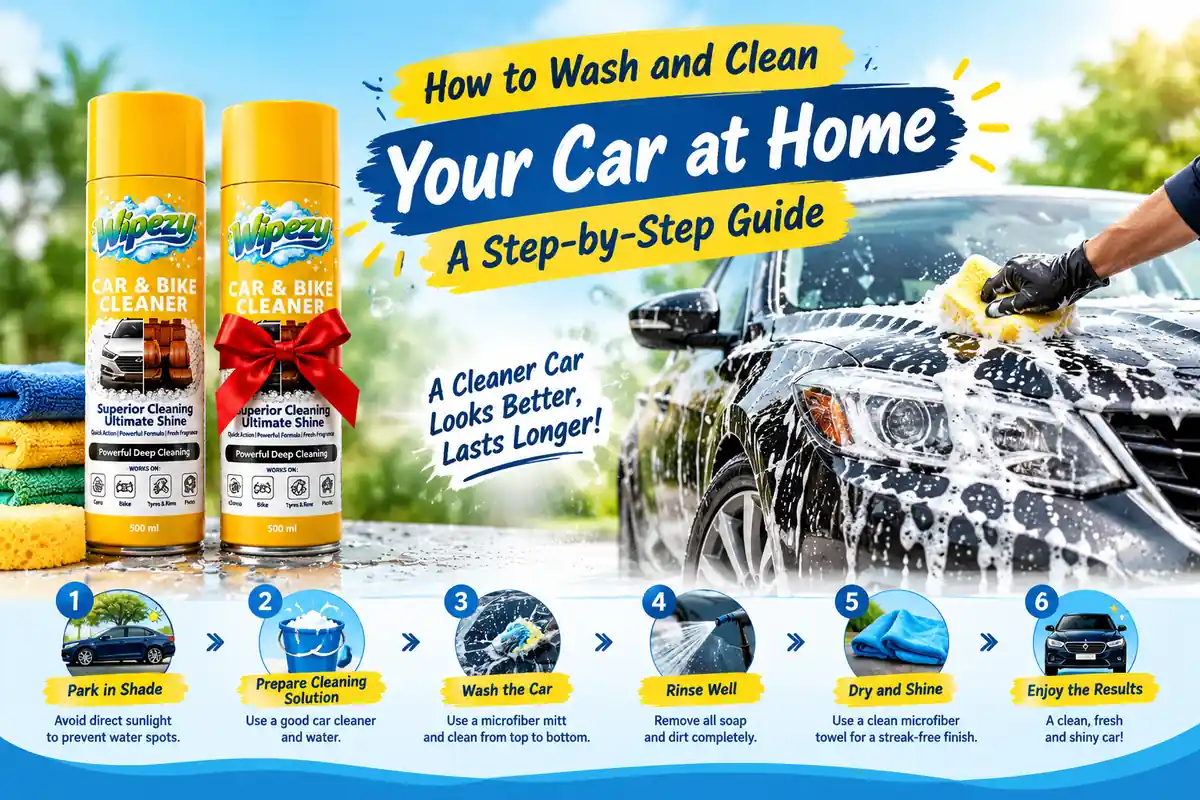
How to Wash and Clean Your Car at Home: A Step-by-Step Guide
By Wipezy Author8 min read
Table of contents
Wash in the shade, never on hot paint. Do the wheels first, then rinse the whole car and wash it from the roof down with car shampoo, using two buckets: one soapy, one plain for rinsing the mitt. Rinse again, dry straight away with a clean microfibre towel, and leave the glass and the inside for last.
In a lot of Indian housing societies, the car gets "cleaned" every single morning. Someone comes by with a cloth, gives it a quick wipe, and the dust is gone. Looks fine. Then one night you see the paint under a streetlight and notice all those fine circular scratches.
That daily wipe is a big part of the reason. A proper car wash and clean at home, done every week or two, does far more for the paint than seven dry wipes, and you don't need a pressure washer or a garage for it. A couple of buckets, the right shampoo and about an hour will do.
Why the Daily Dry Wipe Is Bad News for Your Paint
Most of that dust is actually tiny sand particles. When a dry cloth goes over it, the sand gets dragged across the paint and scratches the top layer a little each time. After months of doing this the car loses its shine, and you start seeing thin round marks on it in sunlight.
If a cleaner wipes your car every day, tell them to use a slightly wet microfibre cloth in place of the dry duster. They should keep folding it so a clean part touches the paint. Better still, skip the daily wipe and wash the car once a week.
Washing Without a Hose (Which Is Most of Us)
Plenty of apartment parkings don't have a tap anywhere near the car, and in some cities you shouldn't be running a hose anyway. In March 2024, during Bengaluru's water crisis, the BWSSB banned the use of drinking water for washing vehicles, with a ₹5,000 fine for anyone caught doing it. So a bucket wash isn't a compromise. In a lot of places it's just the sensible way to do it.
You need two buckets. One gets warm water and car shampoo. The other gets plain water, and its only job is rinsing the mitt after each panel, so the grit you just picked up doesn't go straight back onto the car. Add a microfibre wash mitt, a soft brush for the wheels, a couple of clean microfibre towels for drying, and a mug or spray bottle for rinsing. That's the whole kit.
How to Do a Proper Car Wash and Clean, Start to Finish
Find some shade first, or do it early morning or after sunset. On a hot bonnet the soap dries in seconds, and those dry soap marks take ages to rub off.
-
Wheels and tyres come first. A soft brush plus some car cleaning foam on the brake dust works well.
-
Then a few mugs of plain water over the whole car, so the loose dust floats away.
-
Soapy mitt on the roof to begin with, and move it in straight lines, not circles.
-
Before the mitt touches soap again, dunk it in the plain bucket and squeeze it out.
-
From there you go downwards: glass, bonnet, boot, doors, and the lowest panels at the very end.
-
Don’t let soap sit; rinse each part as soon as you finish it.
-
Dry the car right away with a clean microfibre towel.
Why wheels first? They're the dirtiest part of the car, and doing them last means splashing brake dust and mud onto panels you've just cleaned. Same idea with the lower panels. Everything below the door handles carries road grime, so it goes last and gets its own pass with the mitt.
One shortcut to skip: dish soap or washing powder. They're made to strip grease, and on a car that means stripping the wax that protects the paint. Car shampoo costs a little more, but it's made for exactly this.
Drying Is Where Water Spots Come From
A lot of homes run on borewell or tanker water, and much of it is hard. Let it dry on its own and the minerals stay behind as small white rings, which show up badly on dark cars and on glass. So drying isn't the optional bit.
Lay a big microfibre towel flat on the roof and pull it towards you instead of rubbing. Wring it out often. Use a separate towel for the glass so it doesn't streak. Then open the doors, bonnet and boot and wipe the edges and sills, because water hides in there and later drips down in long lines over your clean paint.
The Stuff That Shouldn't Wait for Wash Day
A few things should be cleaned as soon as you see them. Bird droppings have acid in them, and in the heat they can leave a dull patch on the paint within days. If you park under a tree, the sap that drips on the car gets harder to remove each day. Put a wet cloth or some foam on it for a minute, then wipe gently. Don’t scrub it dry.
Rain brings a different problem. Mud gets stuck inside the wheel arches and behind the bumpers, and it stays wet there for a long time. After a few days of heavy rain, throw some mugs of water into the arches to wash it out.
A Quick Go at the Inside
While you're at it, give the cabin ten minutes. Pull the floor mats out and shake them; wash the rubber ones and leave them in the sun to dry. Wipe the dashboard and steering wheel with a barely damp cloth, since hands, sunscreen and snacks all end up there. Do the inside of the windscreen last. That's where the hazy film builds up, the one you only notice when you're driving into the evening sun.
How Often Does Your Car Need It?
For a car that mostly does city runs, a full car wash and clean every week or two is plenty. The car sleeps outside, under a neem tree or next to a building site? Then weekly, no question. Coastal towns too. In between, a damp microfibre for the dust and a quick dab on bird droppings is enough.
Where a Foam Cleaner Spray Fits In
Buckets are great for a full wash. They're overkill when it's just one bird dropping on the bonnet, dried mud on a single door or brake dust on the alloys in the middle of the week. A foam cleaner spray handles those small jobs. It sits on the spot instead of sliding down the panel, softens the dirt in a minute or so, and wipes off with a damp microfibre cloth. No buckets, no puddle in the parking, and the car stays presentable between proper washes.
Next Weekend, Then
That's really all a good car wash and clean comes down to. Start with the wheels, wash from top to bottom, use two buckets, and dry it quickly. Keep Wipezy handy for a convenient cleaning experience, but avoid using a dry duster on your car's paint. Give your car an hour this weekend, and you'll notice the difference the first time the sun catches the bonnet.
Frequently Asked Questions
Q1. Can I use dish soap or hair shampoo on my car?
A. Better not. Neither is made for car paint, and both can strip the protective wax. Stick to a car shampoo.
Q2. Is it okay to wash my car in the sun?
A. Try to avoid it. Soap and water dry too quickly on hot panels and leave spots. Early morning or evening is better.
Q3. How do I wash my car with very little water?
A. Two buckets and a mitt are enough for a full wash. For quick touch-ups, a foam cleaner and a microfibre cloth need almost no water at all. Here’s more on how foam sprays lift dirt and grease from cars and bikes.
Q4. Is a pressure washer safe for car paint?
A. Mostly, if you keep the nozzle a good arm's length away and use a wide spray. Up close, a narrow jet can lift chipped paint or force water into seals and electrical bits.
Q5. Why does my car look streaky even after drying?
A. Usually the towel was already damp or dirty, or some soap was left on the paint. Rinse a little more, and switch to a fresh, dry microfibre towel halfway through.